Does anyone here use Substack as a publishing platform? Pros? Cons?
Maybe not so wild thought. The way out of the US political mess is for Liz Cheney to run for and get elected president.
What Stood Out, Week 27
The overturning of Roe-v-Wade continues to have repercussions but got overshadowed by the testimony of Cassidy Hutchison. My titled post about anger and Roe-v-Wade speaks to my thoughts about the issue.
This post on Richard Powers by Maria Popova had a couple of zingers in it about humanity, it’s treatment of the environment, and need to regain a shared source of “external significance.” Where that source of external significance should come from is a question. Nature seems most reliable but it is also what we are steadily destroying:
But Powers himself was out of purchasing power. By the time he realized he was at the midpoint of his expected lifetime, he found himself gnawed by the same suspicion many of us face on our darkest days: that humanity had permanently maimed life on Earth, that “there was something inherently wrong with Homo sapiens, that we suffered from congenital defect — a built-in, incurable sadistic impulse toward domination that doomed us to failure along with 98% of Earth’s other experiments that had already gone extinct.”
Insanity wasn’t in our genes — we humans had gone off the rails because our culture had lost its source of external significance. We were so completely colonized by the belief that all meaning came down to economics and private consumption that it no longer even felt like a belief. We’d forgotten the fact that, in Gaylor Nelson’s great phrase, “the economy is a wholly owned subsidiary of the environment, and not the other way around.”
I don’t really know how we find that shared sense of external significance. Everything is relative. There are no absolutes. In a world where culture is built on appetites, nothing is sacred.
This post on the dust devils on Mars pulled me out to something bigger, broader:
Returning to politics, this quote from an article on the Biden administration in The Atlantic felt as if Alexa has been channeling my thoughts to the author:
Compounding those anxieties, Undem said, is “almost despair” among left-leaning voters that Democratic leaders seemingly have no plan for how to respond to this multi-pronged offensive. Jentleson likewise said that Biden has created an “enormous disconnect” and “feeling of powerlessness” among Democrats by failing to make a broader case against structural problems such as the Senate’s small-state bias or the skewing of the Supreme Court bench that the GOP may exploit for sustained minority rule.
I mean really, where is the plan to fight back?
And this article on the similarities between Prohibition and Abortion gave me some hope that the ship can right itself:
Prohibition and Dobbs were and are projects that seek to impose the values of a cohesive and well-organized cultural minority upon a diverse and less-organized cultural majority. Those projects can work for a time, but only for a time. In a country with a representative voting system—even a system as distorted in favor of the rural and conservative as the American system was in the 1920s and is again today—the cultural majority is bound to prevail sooner or later.
But does the author really believe that system of representative voting isn’t in danger of being permanently locked in by that cultural minority?
David French is new to my selection of reading streams. He is a devout Christian, veteran, and, I think, conservative in the sense that conservatives used to be, principled. He makes the point that it is difficult to indict former presidents, for good reason, but in the present case, necessary regardless of the difficulty:
The Case for Prosecuting Donald Trump Just Got Much Stronger
For law enforcement to indict a former president (and perhaps the frontrunner for the 2024 GOP nomination) would set a grave and potentially dangerous precedent. But there is another precedent that is perhaps more grave and more dangerous—deciding that presidents are held to lower standards of criminal behavior than virtually any other American citizen.
This post from Heather Cox Richardson was perhaps the low point of my week:
Heather Cox Richardson, June 30, 2022
In the one term Trump’s three justices have been on the court, they have decimated the legal landscape under which we have lived for generations…
This article in The Paris Review caught my attention big time. Over and over again, it is true, sex sells. I can’t help feeling that the woman in the article is getting the short end of the stick. The arrangement seems to be working, for now. I wonder what she might write about it in ten years.
But really, who am I kidding, I read it to fuel fantasies of the libidinous kind and it did a good job:
Catherine Opie, this woman’s photographic work makes me happier with my own:

And the event of the week:
Hutchinson’s testimony was a withering indictment of America’s 45th president. But it was also, if less directly, an indictment of his party, his supporters, his acolytes, those who went silent and those who spoke up on his behalf. He and they are ever twinned.
Here is an article about how fewer Americans believe in god. I haven’t believed in god, i don’t know, maybe ever. I think I tried when I was young, but it didn’t make sense. It wasn’t rational. I was surprised to find that 80% +/- still believe in god. I would have thought it to be lower.
America, Land of Unbelieving Believers
The groups with the largest declines are also the groups that are currently least likely to believe in God, including liberals (62%), young adults (68%) and Democrats (72%). Belief in God is highest among political conservatives (94%) and Republicans (92%), reflecting that religiosity is a major determinant of political divisions in the U.S.
The interesting part of the article is that Americans haven’t stopped being spiritual, they are just being spiritual in more personal ways, loosely connected to faith traditions other than Christianity which have been personalized to their own needs. What we used to call New Age I suppose. Organized religion is loosing its luster.
This article was just plain frightening:
The MAGA Grocery King of Southwest Florida
“If they try to steal the next election, the ’22 elections, I’m all in. We don’t want to talk about what that is…I have enough guns to put in every single employee’s hands. I hope it never gets there.”
I am deciding that I may read less news, as necessary as it is to keep an eye on what is happening, and more books. My book reading selection tends to be more uplifting, lofty, big picture, etc…
Closing remarks by Liz Cheney at her recent debate with those who seek to replace her in Wyoming.
Think what you will about her voting record, Liz Cheney is a hero. If we get past this moment in history without the loss of democracy, she and I will disagree about almost everything, but, “long may she run,” to quote Neil Young.
It’s been a tremendous honor—the highest honor of my professional life—to represent the people of Wyoming for the last five and a half years. I am a conservative Republican. I’m going to work hard to earn the vote of every Wyomingite in this election. And I think it’s important for people to know that I believe that the most conservative of conservative principles is fidelity to our Constitution.
In Wyoming, we ride for the brand, and our brand is the United States Constitution. So, I’m going to ask people for their vote. I’m going to work hard to earn that vote.
But people need to know something about me. I will never put party above my duty to the country. I will never put party above my duty to the Constitution. I swore an oath under God and I will abide by that oath. I won’t say something that I know is wrong simply to earn the votes of people to earn political support.
That’s what the voters of Wyoming deserve. That’s what the voters of Wyoming demand. That’s the kind of respect that we owe the voters of this great state.
We need to recognize that if we are not faithful to the Constitution, if we embrace lies, if we embrace the lies of Donald Trump, if we tell the people of Wyoming something is not true, we will soon find ourselves without the structure and the basis and the framework of our Constitutional Republic.
If we don’t abide by the Constitution when it is politically inconvenient, then we will not have the Constitution as our shield when we need to defend our First Amendment rights and our Second Amendment rights.
So, I’m asking for your vote and I’m asking you to understand that I will never violate my oath of office, and if you’re looking for somebody who will, then you need to vote for somebody else on this stage because I won’t.
I will always put my oath first."
July 4, 1776, the Second Continental Congress adopted the Declaration of Independence, declaring: “We hold these truths to be self-evident, that all men are created equal, that they are endowed by their Creator with certain unalienable rights, that among these are Life, Liberty and the Pursuit of Happiness.”
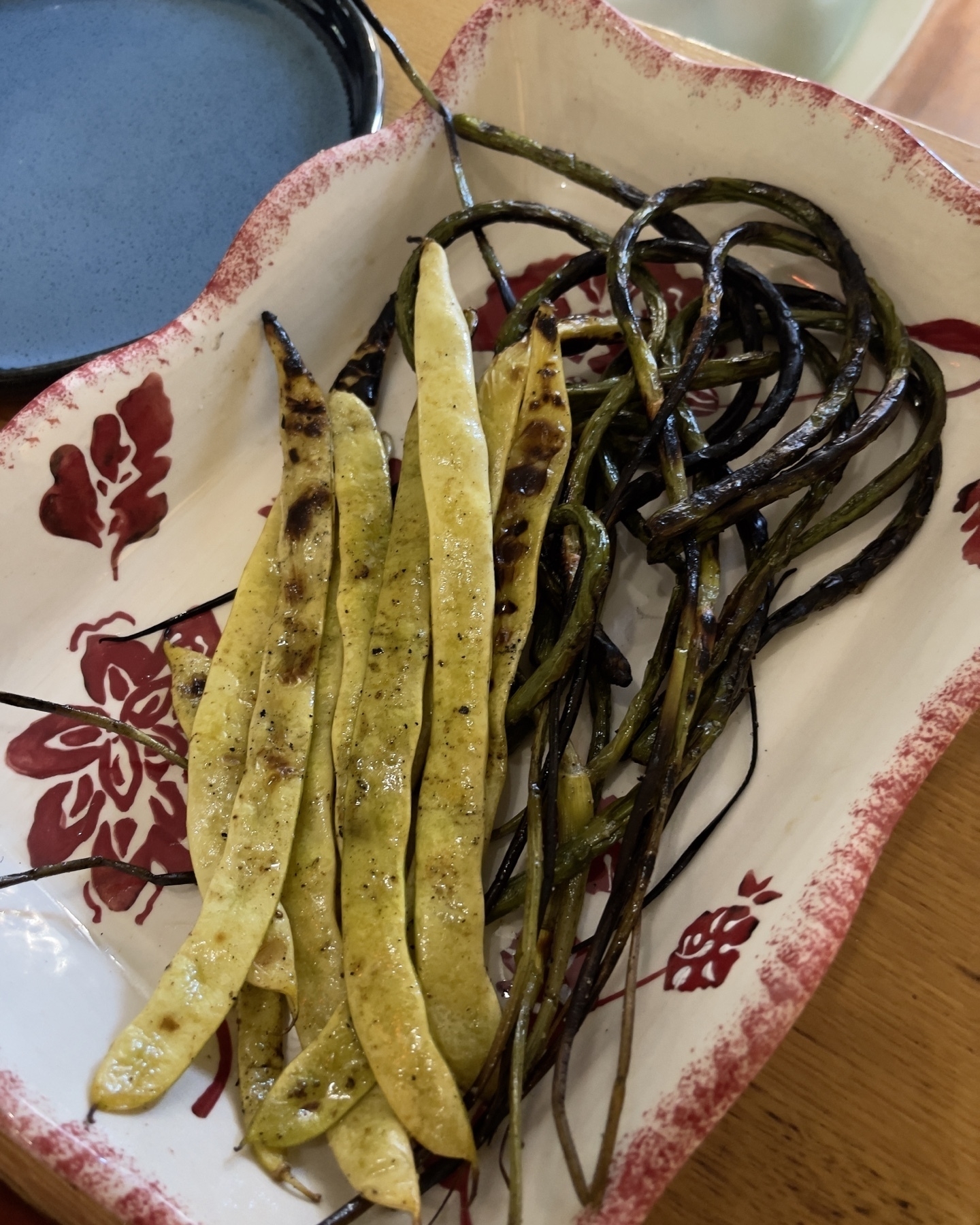
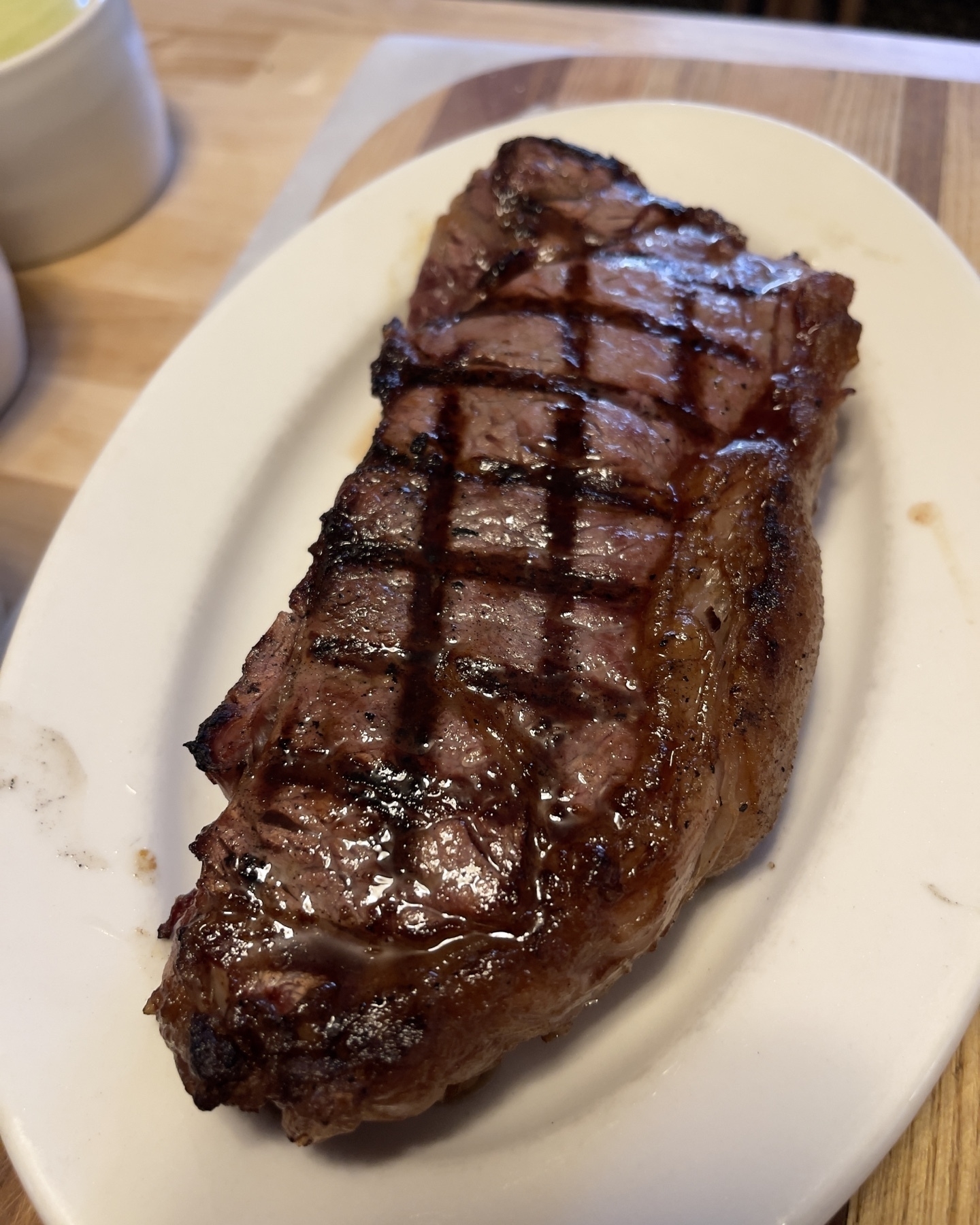
We grilled tonight…
Liz Cheney to Run Against Trump?
As the hearings of the January 6 committee get closer… to implicating Donald Trump criminally in the violent attack on the US Capitol, the former president is reportedly considering announcing a 2024 presidential bid earlier than he might have.
The MAGA Grocery King of Southwest Florida
“If they try to steal the next election, the ’22 elections, I’m all in. We don’t want to talk about what that is…I have enough guns to put in every single employee’s hands. I hope it never gets there.”


Dust devils on Mars… a collection of photographs and a video of the phenomenon.
Heather Cox Richardson, June 30, 2022
This is so depressing…
In the one term Trump’s three justices have been on the court, they have decimated the legal landscape under which we have lived for generations…
Me, feeling a little chuffed: “I got the Sam-e you wanted for $32 for a month’s supply!”
Wife: “Oh I can get a 90 day supply for that much on Amazon.”
Me, incredulous: “Then why aren’t you?”
Wife: “I don’t know…”
20 + years of marriage and she still surprises me.
Why I am not angry about Roe v. Wade
In the immediate aftermath of the Supreme Court decision on Roe v. Wade, there has, predictably, been a lot of expressive reaction on social media, especially by women. One woman proclaimed it was the “boomers” fault. Another woman suggested that if men got angry as women do about this issue, this would never have happened.
The first accusation is barely worth dealing with because it is absurd. Let’s just say that my wife and I are boomers, have been pro choice the whole way, have voted in every election, local and national, have done our share of joining protests on women’s issues and were not outliers in our generation.
The second is a common complaint that women have about the men in their lives, who don’t get how important reproductive rights are to them, and men in general, who enjoy the privileges of being male and never have to suffer the consequences of an unwanted pregnancy.
My wife replied to this woman’s post. She said she tried to explain it to me but I didn’t get it even though I am one of the “good ones.”
Subsequently my wife tried to engage me about whether men had “skin in the game” and why men were not as supportive of women as they should be on this issue. I told her I wasn’t ready to engage with her about this because, truthfully, I was parsing why I wasn’t angry and hadn’t come to a place where I was confident in my answer. This post is an attempt to understand myself on this question.
Let me begin by copping to my own anger baggage. Anger is hard for me. It is hard for me to express it. It is especially hard for me to experience it. I grew up in constant fear of the explosive, dominating and unforgiving anger of my father. Though he was never physically abusive, he certainly was emotionally abusive. I lived my whole life in fear of that anger whenever I was around him. It only ended when he died last summer. As a result, other people’s anger makes me very uncomfortable.
My first marriage was to a woman who used anger the way my father did. She became irrational and was willing to escalate any argument to whatever place it took to shut me up and shut me down. The reverberations with my father were extraordinary in retrospect.
So yes, anger is not my favorite emotion.
I was married to my first wife for about 11 years. Towards the end of our marriage we got pregnant and we chose to abort the pregnancy. It was a sad time in my life. I was glad that the option to abort was there, but sad that our relationship was in such a miserable state that the idea of introducing a child into the midst of it was inconceivable. It was the only time in my life that I fathered a child. Every now and again I wonder about the child that might have been. Yet I know we made the only choice that made sense.
So yes, I’ve had skin in the game.
My reaction to loosing the constitutionally guaranteed right to abortion is complicated by my belief that abortion is morally problematic. I don’t believe in any God. Still, I believe there is right and wrong (as well as many shades of grey between). Violence is almost never right. Certainly it’s not right when it is a choice one is not forced to make. But things get complicated when, regardless of the choice made, violence will be done.
A good friend once said to me, “I’m pretty sure abortion is violence.” My personal experience with abortion confirms that. Abortion is violence to the fetus, violence to the woman and, sometimes, violence to the man. I believe that abortion should be available as a family planning option, but I am most in tune with President Clinton’s formulation, it should be available, safe and rare.
Moving on to jurisprudence, I have read a lot of articles in the past year about the Roe v. Wade decision. I have landed on the side that it was not well founded jurisprudence. Ruth Bader Ginsberg made that point, repeatedly. She also felt it got decided too soon and in a way that cut off the national conversation that might have evolved into a more workable compromise. The abortion landscape in those days could be horrific, especially for women who lacked resources. I don’t fault the women who pushed it forward to a decision in the only way that seemed possible. But, it was a decision vulnerable to overturning because of flaws in its jurisprudence. The coming decades will be sad and unfortunate for many women in the position of wanting or needing an abortion. My hope is that we will pick up the conversation we didn’t finish having before and come out the other side with better jurisprudence all around. The current jurisprudence, founded on selective originalism as it appears to be, and issued by a court stacked with conservatives who are out of touch with what the majority of the country wants, is no less vulnerable to a future, less conservative, court.
My wife is angry with the conservative justices who maintained at their confirmation hearings that they believed in stare decisis and have turned out to be, in her opinion, liars. Committing to stare decisis as a general principle, which is what I believe they did, is not the same as committing to Roe V. Wade as law that should be viewed as settled. I was not at all surprised they overturned Roe V. Wade. I expected them to.
During the run up to the election of Donald Trump in 2016, a good friend confided to me that they despised Donald Trump, but didn’t know if they could bring themselves to vote for Hillary Clinton either. I looked him straight in the eye and said the only issue that should matter is the Supreme Court. The next president was likely going to replace more than one justice (who knew it would be three?). Not showing up, or making some kind of protest vote, failed to recognize the peril of the moment. To me, in that election, that was the issue worth thinking about. That was the issue that one had to vote on. It was, of course, bigger than Roe V. Wade. A conservative court could make all kinds of rulings that would undo the more liberal interpretations of the constitution that make room for the multicultural society I believe in. And that was the point of installing originalist judges on the court. I saw it then and I see it now. I tell everyone who cares to listen that the issue of gravest concern now is democracy itself. We must show up in the next two election cycles. We must vote for democracy. If we don’t, we will loose it.
So, what makes me angry to the extent I do get angry? I am angry with all the moderates and independents who failed to see that the Supreme Court was the central issue and either didn’t show up or made a protest vote in 2016. I am angry with people who allowed themselves to be deluded into voting for Donald Trump and the news outlets that deluded them or pandered to their ratings with false equivalency programming that suggested that 45 wouldn’t be so bad. I am angry with the mostly white Christian Patriarchy’s desire to push their minority viewpoint on the rest of the country. I am angry with Ruth Bader Ginsberg who wouldn’t step down during the Obama administration so that she could be replaced with a judge that would carry on her liberal jurisprudence.
And, in this moment, I am in despair, because I see the same thing lining up to happen again, only this time, democracy is at stake. The mostly white Christian Patriarchy and the wealthy white would-be-oligarchs are not interested in Democracy and are on the verge of successfully taking it down. That is what we are facing in the next two election cycles.
If anger over abortion rights is the issue that brings you to the table to fight for democracy, so be it. But please understand. It is not the central issue. The erosion of democracy is. We are in a determinative moment in history as we struggle to hold on to democracy, and with it, the multicultural rights so many fought so hard to acquire.
William Blake and the Stubborn Courage of the Unexampled
As an artist, he was resolutely his own standard, his own guiding sun… Blake was determined to make what he wanted to make and to make it on his own terms — in a world unready for the art and unfriendly to the terms.
I’m not so sure free speech is a right, but it is certainly a societal or cultural attainment, something we, as a community, can use to enliven, embolden and liberate the soul of our world, provided we are fortunate enough to live in a society that allows such a thing.
Heather Cox Richardson, June 21, 2022
The theme of the day was our election systems, and how Trump’s attack on them continues to threaten our democracy.
In the US, there is only one issue come November, no matter what your tribe.
The walls of all three of our institutions of democracy were scaled and breached on that appalling day. And almost two years thence, one of America’s two political parties cannot even agree whether that day was good or bad, right or wrong.
Judge M. Luttig
On the Knife’s Edge of Democracy
We Americans no longer agree on what is right or wrong, what is to be valued and what is not, what is acceptable behavior and not, and what is and is not tolerable discourse in civilized society.
Judge M. Luttig, prepared statement, 1/6 committee.
Heather Cox Richardson, June 16, 2022
Representative Jamie Raskin (D-MD):
“New evidence is breaking every single day now. Suddenly, a lot of people want to tell the truth.”
About Miracles
Not that there is any reason to listen to me about such things.
“We forget that nature itself is one vast miracle transcending the reality of night and nothingness,” 1
Something about this sentiment, so common, yet… we are, as best I can figure, the embodiers of miracles. We define what they are and we define them in relation to ourselves. Except to the extent the universe may be pan-sentient, and I don’t completely count that possibility out, we are the beginning and end of what is miraculous.
A miracle is an event that seems inexplicable by natural or scientific laws and accordingly gets attributed to some supernatural or praeternatural cause. 2
My personal attitude is that the miraculous is synonymous with the extremely rare.
Informally, English-speakers often use the word miracle to characterise any beneficial event that is statistically unlikely but not contrary to the laws of nature, such as surviving a natural disaster, or simply a “wonderful” occurrence, regardless of likelihood (e.g. “the miracle of childbirth”). 3
Identifying something as a miracle is a religious posture. A positive view on the universe and humanity’s place in it. It is a reverent attitude that makes room for things to be sacred. I believe in the concept of sacred, but only in a secular sense. I believe that when we view something as sacred, we offer it respect and agree not to violate it. It only has meaning through common agreement.
A true miracle would, by definition, be a non-natural phenomenon, leading many writers to dismiss miracles as physically impossible (that is, requiring violation of established laws of physics within their domain of validity) or impossible to confirm by their nature (because all possible physical mechanisms can never be ruled out). The former position is expressed (for instance) by Thomas Jefferson, and the latter by David Hume. Theologians typically say that, with divine providence, God regularly works through nature yet, as a creator, may work without, above, or against it as well. 4
I don’t believe anything happens in the universe that isn’t inherently possible, including god, should s/he exist. I do believe in the extremely rare.
Personally, I believe theologians are out on a limb.
We may give the tendrils of our creative longing different names — poetry or physics, music or mathematics, astronomy or art — but they all give us one thing: an antidote to forgetting, so that we may live, even for a little while, wonder-smitten by reality.