A new page on my portfolio site, Everyday Mandala

A new page on my portfolio site, Everyday Mandala
Been going through a box of CD’s I inherited from a friend who left this earth a number of years ago. She had not one, not two, not three, but four CD’s of music featured on the TV show Miami Vice. Was a big fan of the show back in the day. Apparently she was an even bigger fan!
From The Dispatch
… a new paper from Luis Martínez at the University of Chicago attempts to quantify just how much various countries are overstating their economic activity—using light. “Satellite images can capture the amount of nighttime light a country produces…
From this past weekend on Block Island…
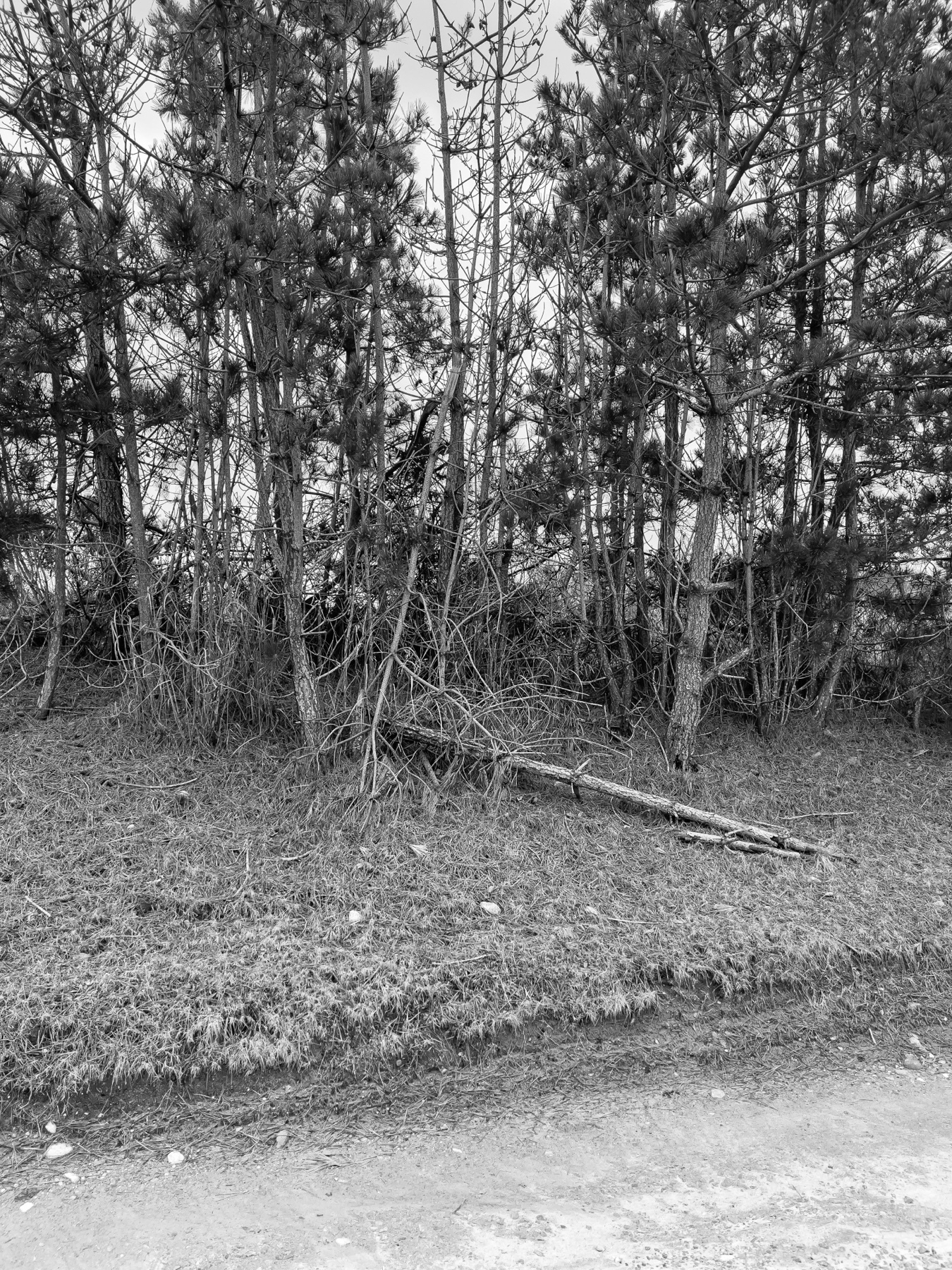

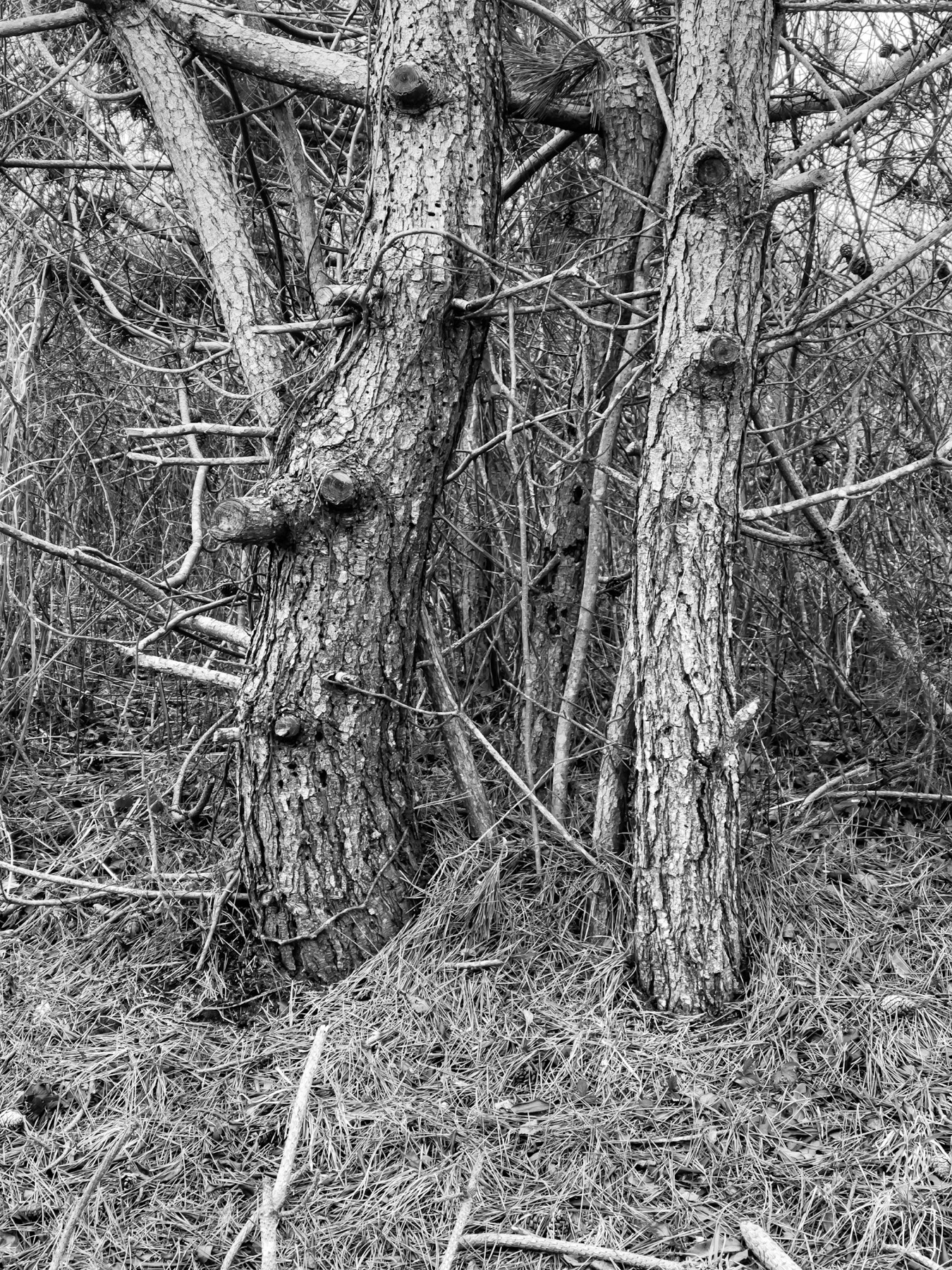
In the middle of the sea heading back to the mainland with my dogs, wife, mother in law and her hippie married husband. Looking forward to a normal stretch of life as my mother in law is doing much better’s and we don’t need to attend to her so closely.

Books Read: The Gift by Lewis Hyde 📚
The more we allow such commodity art to define and control our gifts, the less gifted we will become, as individuals and as a society. The true commerce of art is a gift exchange, and where that commerce can proceed on its own terms we shall be heirs to the fruits of gift exchange: in this case, to a creative spirit whose fertility is not exhausted in use, to the sense of plentitude which is the mark of all erotic exchange, to a storehouse of works that can serve as agents of transformation, and to a sense of an inhabitable world–an awareness, that is, of our solidarity with whatever we take to be the source of our gifts, be it the community of the race, nature, or the gods. But none of these fruits will come to us where we have converted our arts to pure commercial enterprises. 205-06
This past week a musician friend of mine posted a link to a Guardian article in which Nick Cave takes on song lyrics written “in the style of Nick Cave” by ChatGPT. She quoted at length from it, as will I:
Songs arise out of suffering, by which I mean they are predicated upon the complex, internal human struggle of creation and, well, as far as I know, algorithms don’t feel. Data doesn’t suffer. ChatGPT has no inner being, it has been nowhere, it has endured nothing, it has not had the audacity to reach beyond its limitations, and hence it doesn’t have the capacity for a shared transcendent experience, as it has no limitations from which to transcend. ChatGPT’s melancholy role is that it is destined to imitate and can never have an authentic human experience, no matter how devalued and inconsequential the human experience may in time become.
What makes a great song great is not its close resemblance to a recognizable work. Writing a good song is not mimicry, or replication, or pastiche, it is the opposite. It is an act of self-murder that destroys all one has strived to produce in the past. It is those dangerous, heart-stopping departures that catapult the artist beyond the limits of what he or she recognizes as their known self. This is part of the authentic creative struggle that precedes the invention of a unique lyric of actual value; it is the breathless confrontation with one’s vulnerability, one’s perilousness, one’s smallness, pitted against a sense of sudden shocking discovery; it is the redemptive artistic act that stirs the heart of the listener, where the listener recognizes in the inner workings of the song their own blood, their own struggle, their own suffering. This is what we humble humans can offer, that AI can only mimic, the transcendent journey of the artist that forever grapples with his or her own shortcomings. This is where human genius resides, deeply embedded within, yet reaching beyond, those limitations.
Much as I admire Nick Cave and my musician friend for being the valiant and vibrant creators that they are, I think the argument that ChatGPT doesn’t feel and hasn’t experienced is beside the point. It doesn’t need to feel, it only needs to make human beings feel in this particular game. It only needs to predict what will bring tears to our eyes and laughter to our faces, what will draw us deeply in and help us transcend ourselves. I suspect that ChatGPT and other AI like it can and will get very good at that.
If you reject the idea that algorithms can learn to make us feel, then consider what has been said about Facebook (and other social media) algorithms that can suss out what is most likely to draw our attention and hold it. Consider how that played out in recent elections and how it plays out fueling white supremacy and hatred of the other. It turns out anger is a powerful motivation for people to coalesce around and AI has gotten pretty good at feeding us on a banquet of hatred of the other.
AI generated everything is inevitable and it will get better and better. The thing is, AI is a product of mass organization economic systems, capitalism in particular. It is doubtful it could have happened without capitalism or other equally disconnecting ways of operating an economy and, by extension, society. The key point to remember is that we don’t have to participate in that economy, at least, not all the time. I don’t know if we can completely eliminate capitalism or other mass organizational systems. I don’t know if we would even want to. There are some breathtaking benefits. But it does seem possible to organize parallel economies that are more local in scale, which is the scale at which the alternatives can thrive and be satisfying; the scale at which it matters that the song channeling our personal human experience and making us feel was created by another human being; the scale at which it matters that we go to hear that song performed by the creator and participate in the communal activity that live performance creates.
I have been reading about alternative economics. Two books are very influential to my thinking. Sacred Economics by Charles Eisenstein and The Gift, by Lewis Hyde. I have finished the first and am halfway through the second.
Sacred Economics helped me understand why growth is essential to capitalism—there is always more debt than value being created through production—and how capitalism fills the void between debt and product by converting the commons—that which should belong to everyone—to privately held resources to be exploited for profit. ChatGPT is another attempt to lay claim to the commons, in this case, the creative commons that all art product aspires to be part of. In Sacred Economics, Eisenstein argues that eliminating usury (the ability to make money on money), creating currency that devalues with time (not through inflation, but through planned devaluation over a specific time frame), and practicing a gift economy as tribal and other types of small communities have often done.
In Part I of The Gift, Lewis Hyde explains the history and functioning of the gift economy in great detail, as well as the history of usury and modern economies which have supplanted the gift economy. In Part II, which I have just now started to make my way through, he explains the relevance of a gift economy to the arts.
AI is a product of mass economic systems, capitalism in particular. AI couldn’t happen without these systems and will function best within these contexts. Human rendered art can and sometimes does function well within that mass economic context, but, when you get beyond the few giants and near giants in any creative industry human creative output struggles to function in that context and starts to require an economy built on community. This is the gift economy that Hyde and Eisenstein, drawing heavily from Hyde, describe.
My guess is that we need to relearn the gift economy if we are to have a satisfying way of being human creatives and connecting our creations with other human beings. I don’t presently believe that one excludes the other but we must actively and intentionally reclaim the gift economy if we are to benefit from it. There is much work to do in this direction.
This is all I can say about economic alternatives at present because I am still reading and thinking. The important point I am making is that it’s not AI vs human artists but an economic system that by its design breaks down community as against one that builds it. The choice is ours as to which one we want to labor and participate in.
From a couple of days ago…

From a couple of days ago…
Another one on AI and the arts. This time ChatGPTlithub.com
The battle lines are being drawn between AI and the arts community. Tomorrow I will publish a long form post addressing this issue with maybe an unexpected take. In the meantime… hyperallergic.com
From this morning’s walk…

Upon him whom you rightly desire to harm, against whom weapons are lawfully carried, upon him usury is legally imposed. On him whom you cannot easily conquer in war you can quickly take vengeance with the hundredth. From him exact usury whom it would not be a crime to kill. He fights without weapon who demands usury; without a sword he revenges himself upon an enemy, who is an interest collector from his foe. Therefore, where there is the right of war, there is also the right of usury. –St. Ambrose
Heather Cox Richardson for MLK day:
… heroism is … regular, flawed human beings, choosing to put others before themselves, even at great cost, even if no one will ever know, even as they realize the walls might be closing in around them.

Books Read: Sea of Cortez: A Leisurely Journal of Travel and Research by John Steinbeck 📚
Boredom arises not so often from too little to think about, as from too much, and none of it clear nor clean nor simple.
Books Read: Sea of Cortez: A Leisurely Journal of Travel and Research by John Steinbeck 📚
It is said so often and in such ignorance that Mexicans are contented happy people. “They don’t want anything.” This, of course, is not a description of the happiness of Mexicans, but of the unhappiness of the person who says it. For Americans, and probably all northern peoples, are masses of wants growing out of inner insecurity. p81
I have been reading The Log from the Sea of Cortez, by John Steinbeck. It is the chronicle of a six week marine specimen collecting trip around the Sea of Cortez. While describing the adventure, he frequently ascends to philosophical rumination about creatures, humankind and the universe. This morning I read the following:
There is a strange duality in the human which makes for an ethical paradox. We have definitions of good qualities and of bad; not changing things, but generally considered good and bad throughout the ages and throughout the species. Of the good we think always of wisdom, tolerance, kindliness, generosity, humility; and the qualities of cruelty, greed, self-interest, graspingness, and rapacity are universally considered undesirable. And yet in our structure of society, the so called and considered good qualities are invariable concomitants of failure, while the bad ones are the cornerstones of success. A man—a viewing-point man—while he will love the abstract good qualities and detest the abstract bad, will nevertheless envy and admire the person who through possessing the bad qualities has succeeded economically and socially, and will hold in contempt that person whose good qualities have caused failure. When such a viewing-point man thinks of Jesus or St. Augustine or Socrates he regards them with love because they are the symbols of the good he admires, and he hates the symbols of the bad. But actually he would rather be successful than good. In an animal other than man we would replace the term “good” with “weak survival quotient” and the term “bad” with “strong survival quotient.” Thus, man in his thinking or reverie status admires the progression toward extinction, but in the unthinking stimulus which really activates him he tends toward survival. 1
The passage hits home for me as I am the sort that falls into the “weak survival quotient” category. I have often thought, a little despairingly, about my inability to make a solid enough living to enable me to pass on my genes to a new generation.
But there is something wrong with his analysis. In earlier passages of the same chapter, Steinbeck talks about how powerful families don’t often remain powerful beyond a few generations and sometimes don’t last one generation. Comparatively, the power of Jesus and St. Augustine and Socrates has extended across a multitude of generations (for better or worse) and inhabited the minds of far more people. Our concept of what power is might be inadequate. Spiritual and intellectual accomplishment is remembered far longer. Oligarchs are memorable mostly to the communities directly affected by them. Who talks about Aristotle Socrates Onassis anymore?
In my thinking and reading of late, I am finding that the very qualities of the “strong survival quotient” are the ones that plunder the planet and exploit human beings; a system that values and rewards destructive instincts, not constructive ones. As Steinbeck suggests, we have known since the beginning of recorded thought what constitutes good and bad, but have failed for just as long to put “the good” at the center of how our societies function.
We are not very far removed from our primal selves it seems. Steinbeck speculates this may be part of the problem. He wonders if we were ready for consciousness:
Perhaps no other animal is so torn between alternatives. Man might be described fairly adequately, if simply, as a two-legged paradox. He has never become accustomed to the tragic miracle of consciousness. Perhaps, as has been suggested, his species is not set, has not jelled, but is still in a state of becoming, bound by his physical memories to a past of struggle and survival, limited in his futures by the uneasiness of thought and consciousness. 2
A recent New Yorker article on Wendell Berry finds him echoing Steinbeck’s conception of human beings as two legged paradoxes:
The following year, he marched against the Vietnam War in Lexington, where he told the crowd that, as a member of the human race, he was “in the worst possible company: communists, fascists and totalitarians of all sorts, militarists and tyrants, exploiters, vandals, gluttons, ignoramuses, murderers.” But, he insisted, he was given hope by people “who through all the sad destructive centuries of our history have kept alive the vision of peace and kindness and generosity and humility and freedom.” 3
Steinbeck has some things to say about hope too:
It is amazing how the strictures of the old teleologies infect our observation, causal thinking warped by hope. It was said earlier that hope is a diagnostic human trait, and this simple cortex symptom seems to be a prime factor in our inspection of our universe. For hope implies a change from present bad condition to a future better one. The slave hopes for freedom, the weary for rest, the hungry for food. And the feeders of hope, economic and religious, have from these simple strivings of dissatisfaction managed to create a world picture which is very hard to escape. Man grows toward perfection; animals grow toward man; bad grows toward good; and down toward up, until our little mechanism, hope, achieved in ourselves probably to cushion the shock of thought, manages to warp our whole world. Probably when our species developed the trick of memory and with it the counterbalancing projection called “the future,” this shock-absorber, hope, had to be included in the series, else the species would have destroyed itself in despair. For if ever any man were deeply and unconsciously sure that his future would be no better than his past, he might deeply wish to cease to live.4
We are a puzzling species. Full of hope for better. Full of desire that continuously draws us to the worst. How we overcome ourselves is a question for the ages.
John Steinbeck, The Log from the Sea of Cortez, p80 ↩︎
Ibid. ↩︎
Wendell Berry’s Advice for a Cataclysmic Age | The New Yorker ↩︎
John Steinbeck, The Log from the Sea of Cortez, p72 ↩︎
Fiona and Chas
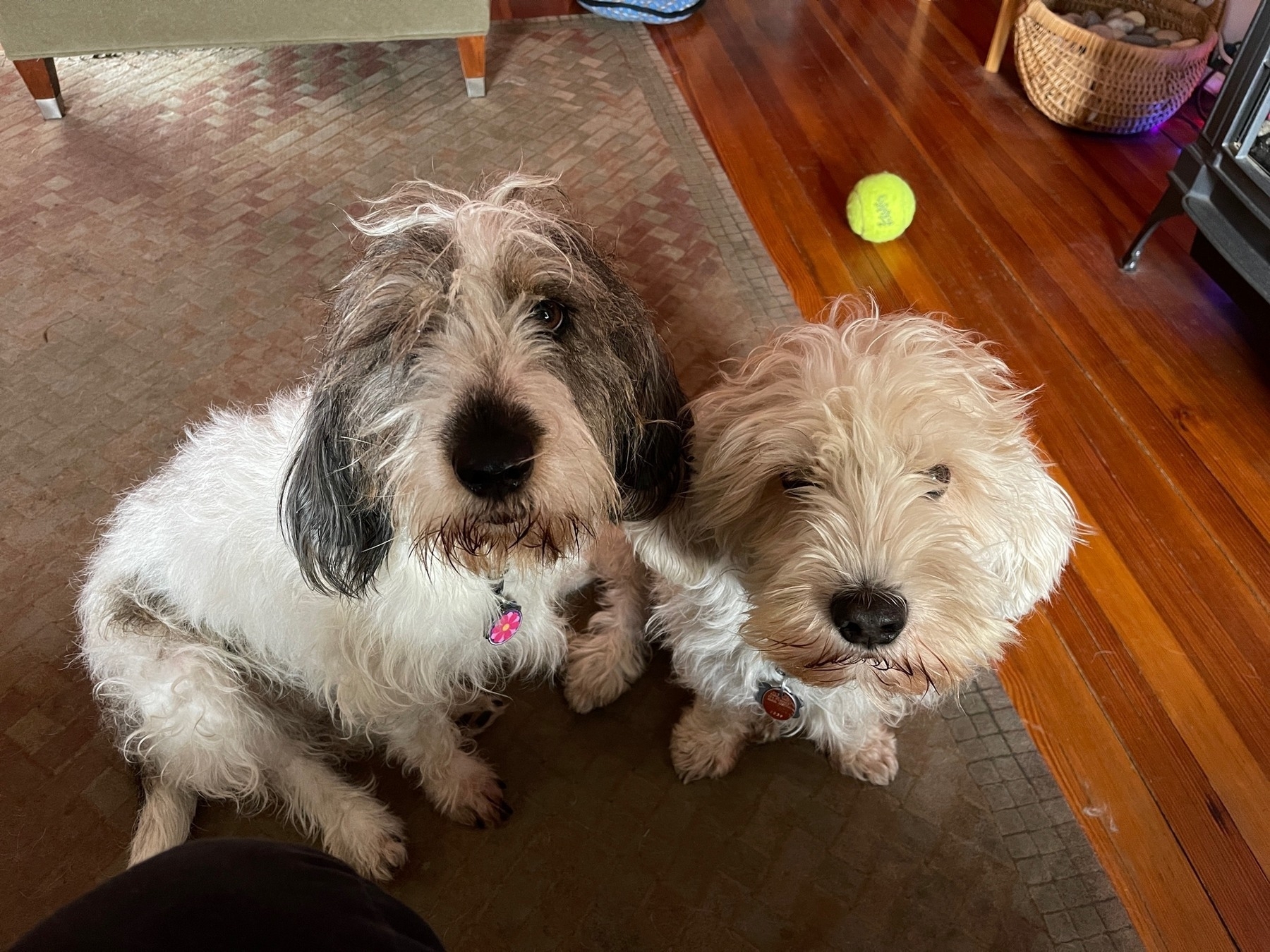
From this morning’s walk…
From today’s walk…

What Would it Mean to Really Make Space for Mother-Artists
As quickly as mother-artists find ways to turn parenthood into something generative, of course, the system finds ways to delegitimize or challenge the value of that work.
Books Read: Sea of Cortez: A Leisurely Journal of Travel and Research by John Steinbeck 📚
A dull man seems to be a dull man no matter what his field, and of course it is the right of a dull scientist to protect himself with feathers and robes, emblems and degrees, as do other dull men who are potentates and grand imperial rulers of lodges and dull men.
Writing is a part of my life; cooking is a part of my life. Making love is a part of my life; walking down the street is a part of it. Writing demands more time, but it takes from all of these other activities. –Maya Angelou
From a while ago…